Beyond the Guesswork: How Gamma Scanning Optimizes Distillation Column Performance
Introduction: Why Distillation Columns Can’t Afford Guesswork
Distillation columns are the heart of most refineries and chemical plants. From crude oil separation to petrochemical processing, column performance directly impacts product quality, yield, and overall plant profitability.
But when a column begins to underperform, the biggest challenge isn’t fixing the issue—it’s finding the real cause.
Is it tray damage?
Is the column flooding?
Is there internal fouling?
Or is foaming reducing separation efficiency?
Traditionally, operators relied on experience, assumptions, and costly shutdown inspections. Today, however, gamma scanning is transforming the way column problems are diagnosed. Instead of guesswork, operators can now rely on real, measurable data.
What Is Gamma Scanning (Tower Scan)?
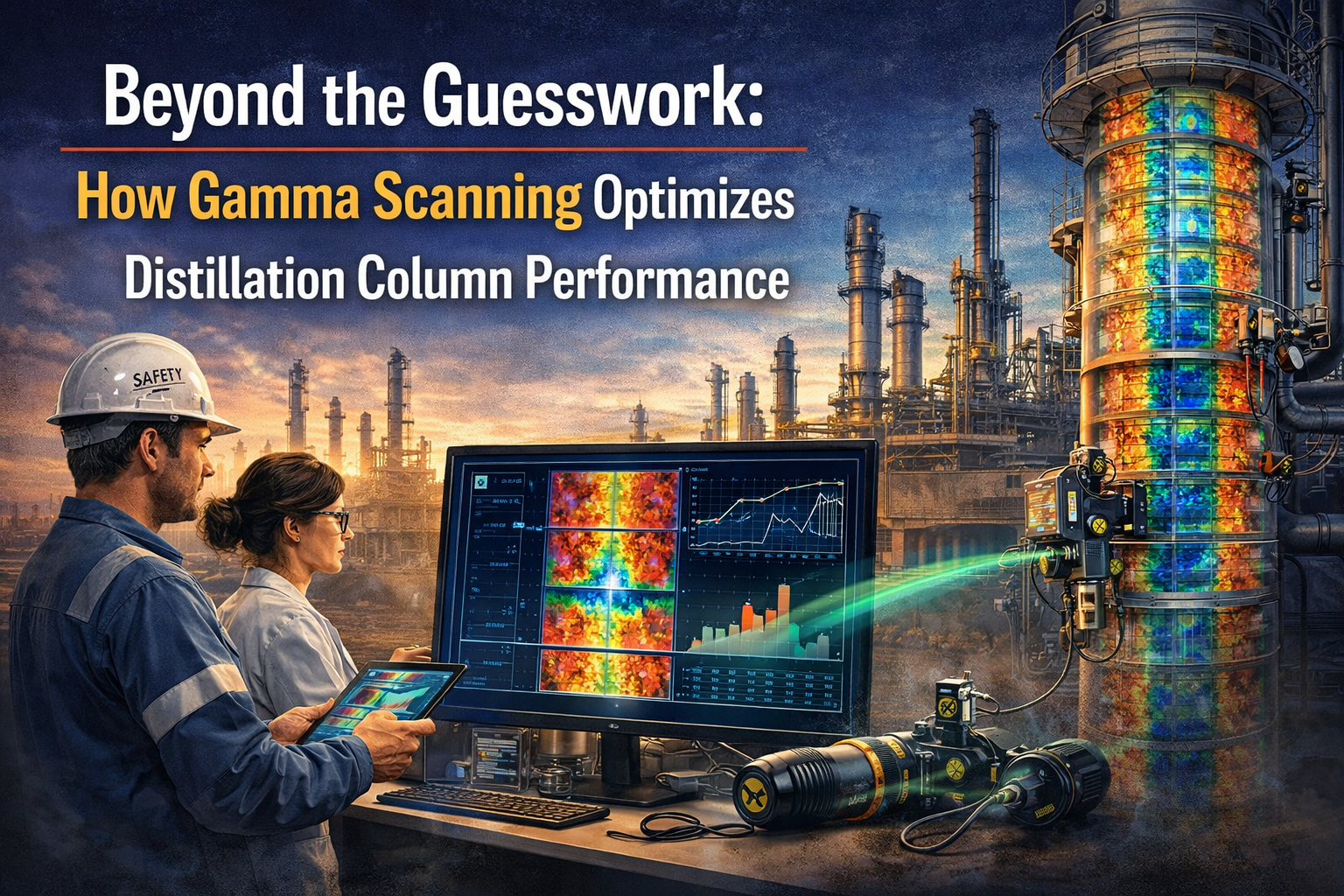
Gamma scanning—often referred to as a tower scan—is a non-invasive diagnostic technique that allows engineers to analyze the internal condition of a distillation column while it is still operating.
The process works by measuring density variations across the height of the column in real time. These density measurements create a detailed profile that reveals exactly what is happening inside the column—without opening it or shutting it down.
This means plant teams can finally “see inside” one of the most critical pieces of equipment in their facility.
The Problem with Trial-and-Error Troubleshooting
When a distillation column loses efficiency, the impact can be immediate and expensive:
- Reduced product purity
- Lower separation efficiency
- Increased energy consumption
- Higher reprocessing costs
- Unexpected shutdown risks
Without accurate internal data, troubleshooting often becomes a process of trial and error. Operators may adjust reflux rates, temperatures, or pressure conditions without knowing whether they are addressing the real problem. This not only wastes time but can also worsen the situation.
Gamma scanning eliminates this uncertainty by providing clear, reliable insight into the internal condition of the column.
How Real-Time Density Profiling Works
One of the biggest advantages of gamma scanning is its ability to generate a real-time density profile of the entire column.
Instead of guessing what might be happening between trays, engineers can analyze a detailed density curve that highlights abnormal zones instantly. This allows them to detect issues such as:
- Tray Damage or Missing Trays
A damaged tray disrupts the vapor-liquid contact required for efficient separation. Gamma scanning clearly identifies density inconsistencies that indicate tray collapse, displacement, or internal damage.
- Flooding Inside the Column
Flooding is one of the most common performance issues in distillation columns. With gamma scanning, engineers can detect the exact stage where flooding begins, allowing them to take corrective action quickly.
- Foaming Problems
Foaming reduces effective separation and can lead to unstable operation. Density profiling helps identify abnormal liquid distribution that signals foaming inside the column.
- Fouling and Internal Blockages
Over time, fouling reduces the efficiency of trays and packing. Gamma scanning reveals dense accumulation zones that indicate fouling or deposits inside the column.
Why Data-Driven Diagnostics Matter
The biggest shift in modern process industries is the move from assumption-based maintenance to data-driven decision-making.
Gamma scanning allows plant operators to:
- Identify the exact location of the problem
- Avoid unnecessary shutdowns
- Make faster and more accurate maintenance decisions
- Reduce troubleshooting time dramatically
Instead of replacing components blindly or adjusting operating parameters repeatedly, operators can now take targeted corrective actions based on real evidence.
The Commercial Benefits: More Than Just Inspection
While gamma scanning is a powerful technical tool, its real value lies in the commercial advantages it delivers.
- Improved Product Yield
When a distillation column operates efficiently, separation becomes more precise. This leads to better product quality and higher yield from the same raw material.
- Reduced Energy Consumption
Inefficient columns often consume more steam and power. By identifying internal issues early, gamma scanning helps optimize energy usage and lower operating costs.
- Elimination of Unnecessary Shutdowns
Shutdowns are extremely expensive—not just because of maintenance costs but also due to lost production. Non-invasive diagnostics allow plants to continue operating while the inspection is carried out.
- Faster Problem Resolution
Instead of spending weeks troubleshooting, plant teams can identify the root cause in a single scan. This saves both time and operational resources.
Seeing Inside Without Opening the Column
The biggest advantage of gamma scanning is simple but powerful: it allows operators to see what’s happening inside the column without opening it.
This visibility transforms the way distillation systems are managed. Instead of reactive maintenance, companies can move toward predictive and proactive strategies. Small issues can be detected early, corrected quickly, and prevented from becoming major failures.
Why Gamma Scanning Is the Future of Tower Optimization
As refineries and chemical plants focus more on efficiency, reliability, and cost control, non-invasive diagnostic tools like gamma scanning are becoming essential.
With accurate density profiling, operators gain:
- Better control over separation performance
- Improved process stability
- Lower operational risks
- Long-term asset reliability
Most importantly, it replaces guesswork with confidence.
Conclusion
Distillation column problems are too expensive to solve through trial and error. Gamma scanning offers a smarter, faster, and more reliable way to diagnose internal issues without shutdowns.
By providing real-time density insights, this technology helps plant operators improve separation efficiency, increase product yield, and reduce operating costs. In an industry where performance and reliability matter most, gamma scanning is not just an inspection method—it is a powerful optimization tool.