The “Radiologists” of Oil & Gas: Why Non-Invasive Diagnostics Are the Future of Asset Management
Introduction: A New Way to “See Inside” Critical Assets
In the medical world, radiologists diagnose problems without surgery. Using tools like CT scans and MRIs, they detect issues early and help doctors make precise decisions.
Now imagine applying the same concept to the oil & gas industry.
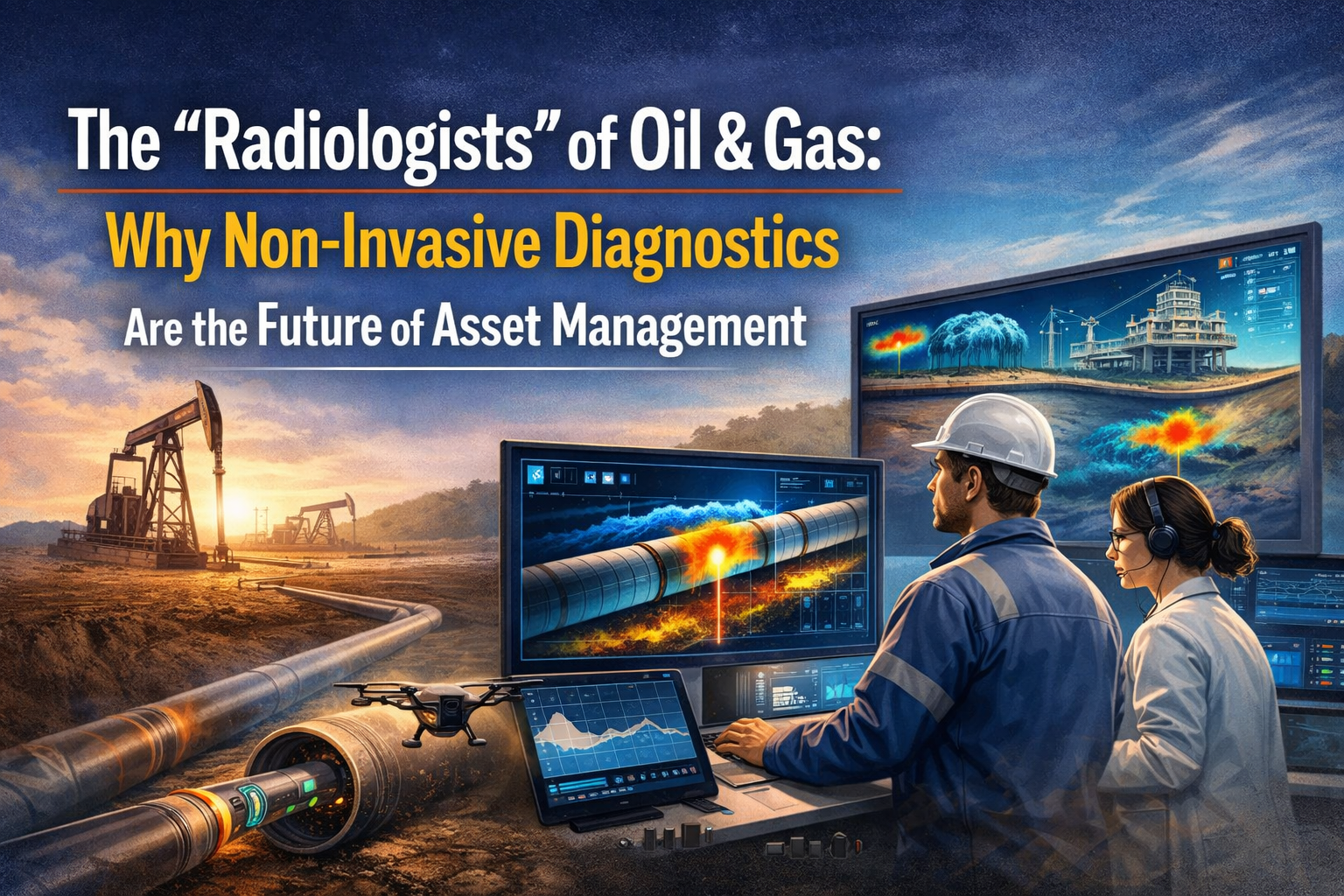
Pipelines, reactors, storage tanks, and process systems are the backbone of industrial operations. But traditionally, identifying internal issues required shutdowns, dismantling, or costly trial-and-error maintenance. Today, non-invasive diagnostic technologies are changing that completely. These advanced inspection techniques are becoming the “radiologists” of oil & gas—helping companies see inside critical assets without disrupting operations.
The Problem with Traditional Asset Management
For decades, asset management in oil & gas has relied on reactive maintenance. Equipment was often repaired only after performance dropped or failures occurred. This approach creates several major challenges:
- Unexpected downtime that leads to production losses
- High maintenance costs due to repeated troubleshooting
- Safety risks caused by undetected internal damage
- Shorter asset life because problems are discovered too late
In a competitive and cost-sensitive industry, these inefficiencies are no longer sustainable. Companies now need predictive and data-driven maintenance strategies, and that’s exactly where non-invasive diagnostics comes in
What Are Non-Invasive Diagnostics in Oil & Gas?
Non-invasive diagnostics refer to advanced inspection technologies that allow engineers to analyze the internal condition of equipment without opening, dismantling, or shutting it down.
These technologies can detect:
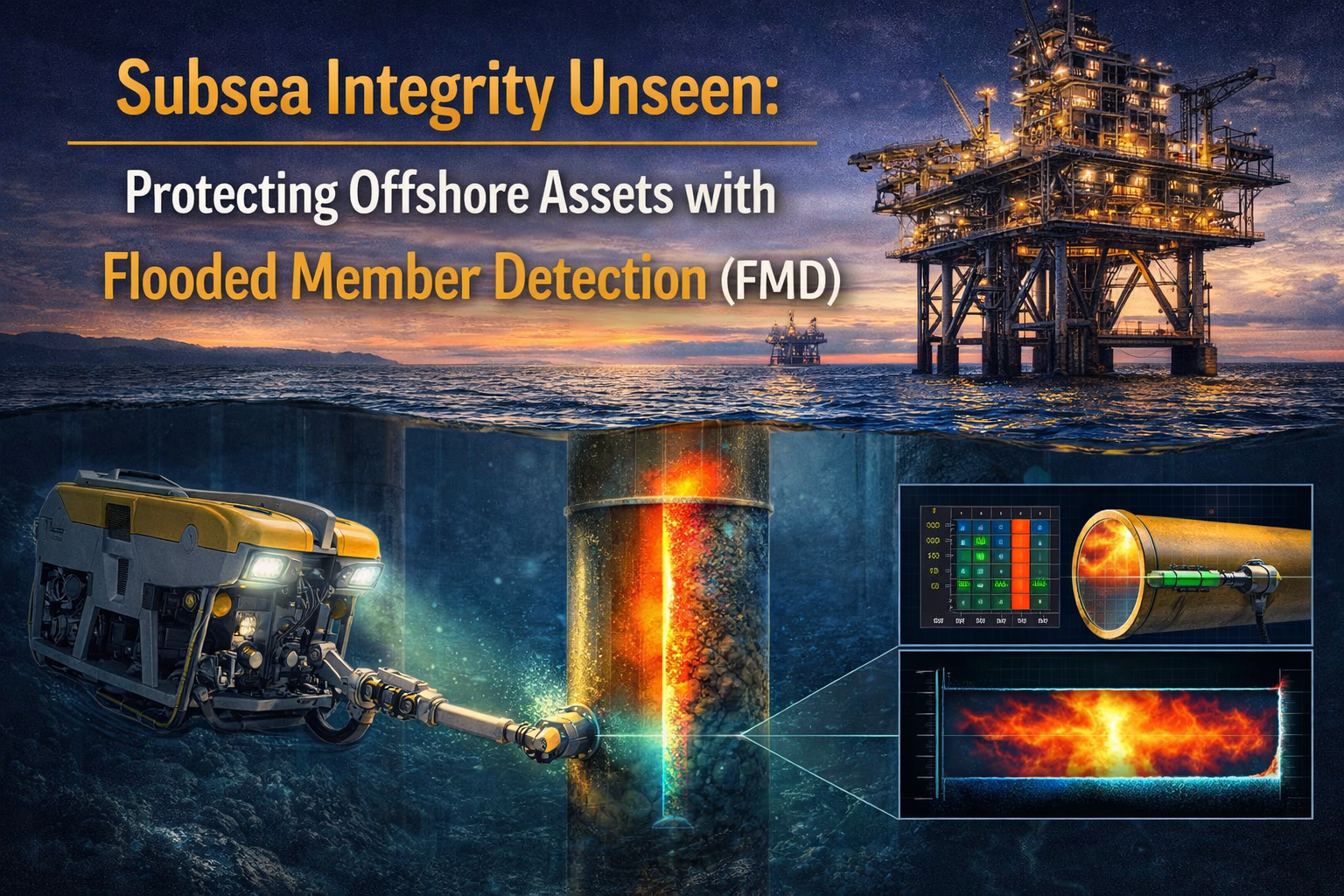
- Internal corrosion in pipelines
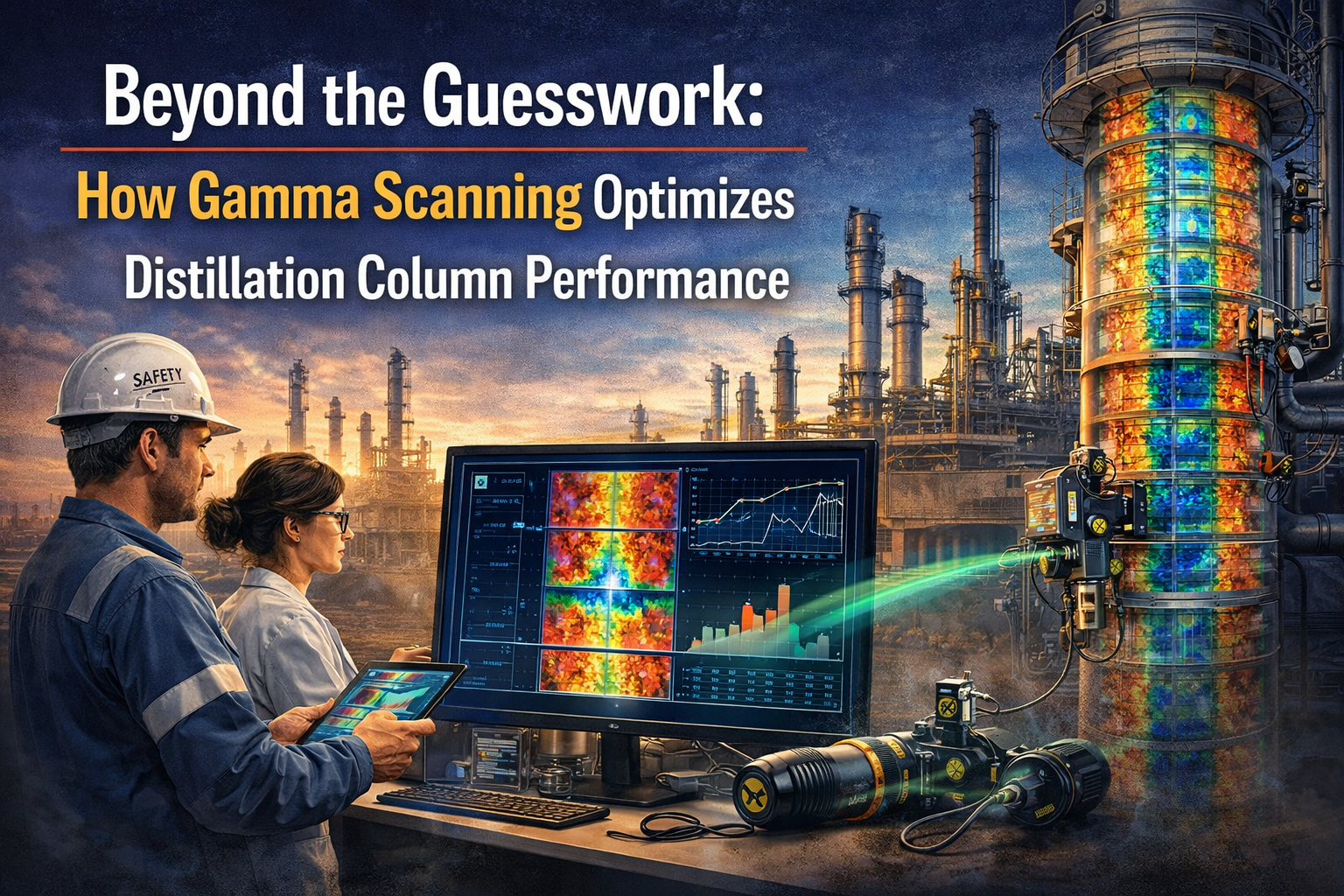
- Fouling and blockages inside process equipment
- Wall thickness loss in storage tanks
- Flow irregularities in pipelines
- Structural defects that are invisible from the outside
By providing clear, accurate data, these diagnostic techniques eliminate guesswork and allow maintenance teams to take precise actions.
Why They Are Called the “Radiologists” of Oil & Gas
Just like a medical radiologist helps doctors diagnose patients more accurately, non-invasive diagnostics help engineers make smarter decisions about industrial assets.
Here’s how the comparison fits perfectly:
| Radiologists in Healthcare | Non-Invasive Diagnostics in Oil & Gas |
| Detect problems early | Identify internal issues before failure |
| Avoid unnecessary surgery | Prevent unnecessary shutdowns |
| Provide accurate imaging | Deliver precise inspection data |
| Improve patient life | Extend asset life |
This shift from reactive to predictive maintenance is transforming how companies manage their infrastructure.
Key Benefits of Non-Invasive Diagnostics
- Reduced Downtime
One of the biggest advantages is that inspections can be performed while equipment is still operating. This means companies avoid production losses and unnecessary shutdowns.
- Lower Maintenance Costs
Instead of replacing parts based on assumptions, companies can now take action based on real data. This significantly reduces wasted time, labor, and materials.
- Extended Asset Life
Early detection of corrosion, wear, or internal damage allows companies to fix small issues before they become major failures. This helps assets last longer and perform better.
- Improved Safety
Undetected internal damage can lead to serious accidents. Non-invasive diagnostics help prevent failures and improve workplace safety.
- Better Decision-Making
With accurate diagnostic data, maintenance teams and plant managers can plan repairs more effectively and allocate budgets wisely.
The Future of Asset Management Is Predictive
The oil & gas industry is rapidly moving toward predictive asset management. Instead of waiting for failures, companies are now using advanced technologies to monitor equipment health continuously.
Non-invasive diagnostics play a major role in this transformation because they provide:
- Real-time insights
- Data-driven decision-making
- Cost-efficient maintenance strategies
- Long-term operational reliability
As technology continues to evolve, these diagnostic methods will become even more accurate, faster, and more affordable.
Conclusion
Non-invasive diagnostics are no longer just an advanced option—they are becoming a necessity in modern asset management. By acting as the “radiologists” of oil & gas, these technologies allow companies to see deeper, detect problems earlier, and make smarter decisions without interrupting operations.
For companies looking to reduce costs, improve efficiency, and extend the life of critical assets, the future is clear: non-invasive diagnostics are the next generation of asset management.